Showing posts with label Daniellescorner. Show all posts

Monday, June 2, 2014

Danielle's Corner: Finding Beauty in Ugliness

Upon entering Sid Phillip's bedroom, Woody and Buzz are greeted by demonic looking toys. A metallic octopus with a baby's head strides over next to a pair of legs with a fishing rod for a body and a rubber duck head mounted on a muscular dolls body. Woody begs them to stay away by using Buzz's karate chop button. Their second meeting begins much like the first with Woody begging them to stay away. However, the ending is quite different. As the toys surround Buzz, Woody pushes and shoves but the toy will not give way to him. Once they move away from Buzz, Woody dashes over and sees that they have fixed Buzz's broken arm. He thought they were attacking Buzz when they were actually helping him. Their final meeting is when Woody asks them for help in saving Buzz and they agree without hesitation.
Disney is consistently dishing out films that depict ugliness as beautiful. Beauty and the Beast is the most obvious. The film directly says, "beauty is found within" and features a complex characters like the Beast who is more than a simply a monster, an enchantress who is much more than a simple old beggar woman, and Belle who is much more than her beauty implies. Another movie that takes on this trope is The Hunchback of Notre Dame. Quasimodo, the ugly and deformed hunchback is more than he appears, Esmeralda is kind and gentle despite her gypsy title, and Frollo is evil and satanic despite his holy role in the church.
Even the Lizzie McGuire Movie tackles this trope with the Italian popstar, Paolo Valisari. He seems like the ultimate gentleman and perfect singer and his is multiplied by his handsome exterior. But he turns out to be a manipulative, lip-syncing fraud and it is Gordo, the messy haired guy who isn't super handsome, who deserves Lizzie's heart.
There are a ton of examples I could use throughout this blog besides those but I digress. What do all of these stories have in common? They take on a much bigger challenge than simply routing for the underdog. They say that beauty is found within. This very much mirrors the teachings of Jesus in the New Testament who chose people who didn't look perfect and didn't seem worthy to stand alongside him.
We still live in a culture that values exterior beauty over internal. But let's learn from Toy Story and give people a chance because in the end, we are all people who deserve to be treated nicely.

"Weeds are flowers, too, once you get to know them." - A.A. Milne

Sunday, June 1, 2014

Danielle's Corner: The Virtue of Being Andy's Toy

"Say there Lizard and Stretchy Dog. Let me show you something. It looks as though I've been accepted into your culture," says Buzz Lightyear. Wood, Andy's ultimate favorite toy before Buzz showed up, looks over in paranoia and disgust. Buzz lifts his foot and reveals a familiar marking. "Your Chief, Andy, inscribed his name on me." Indeed the name "Andy" is written in permanent ink on the bottom of Buzz's foot.
When Buzz first is given the mark of acceptance, he is still living under the belief that he is a space ranger who must fix his ship and save the galaxy from the evil Emperor Zurg. After a line of unintended events leads Buzz and Woody into the neighbor Sid's house, Buzz learns that his life has been a meaningless lie. A commercial airs on the TV just as Buzz enters the room which shows a million Buzz Lightyear's on Al's You Barn shelves and announces that Buzz Lightyear is this years hottest toy.
Ashamed, and lost, Buzz gives himself one last chance to prove he is a space ranger by attempting to fly out an open window. He climbs up the railing with new-found agility, spreads his wings and leaps forward only to submit himself to gravity's pull and falls to the floor.
Once reunited with Woody, Buzz is a wreck from the realization that he is just a toy like Woody insisted. He becomes immobile and quiet. All hope is lost. Not only is he not a space ranger but tomorrow he will be shot up on a rocket by Sid and blown to pieces.
Woody, realizing his agonizing tone toward Buzz born out of frustration isn't waking Buzz up, tries another tactic. "Oh Buzz," he says. "You must not be thinking clearly."
"No, Woody, for the first time I am thinking clearly," Buzz responds. "You were right all along. I'm not a space ranger. I'm just a toy. A stupid little insignificant toy."
"Whoa, hey -- wait a minute!" Woody cries. "Being a toy is a lot better than being a space ranger."
"Yeah, right," Buzz says sarcastically.
"No, it is," Woody insists. "Look, over in that house is a kid who thinks you are the greatest, and it's not toy! You are his toy."
because you're a space ranger, pal, it's because you're a
After a bit more dialogue, Buzz lifts his foot where Andy's name is written. A sudden surge of realization runs through him.
Throughout all three Toy Story movies, there is a heavy emphasis on Andy's devotion to his toys. There is a virtue that goes with belonging to Andy. He loves his toys, takes care of his toys, and accepts his toys. He marks them with his name to show they belong to him. Religiously this compares to God marking his children as his own. Andy is the ultimate kid, or God for the toys. He loves them and accepts them and marks them as his own.
Woody sparks a revelation in Buzz -- that being a space ranger was great, but having the unfailing love of a child is even better. And there is virtue in that identity.

Friday, May 23, 2014

Danielle's Corner: Pixar Fantasy Movie - Ratatouille, Inc.

In honor of our most recent episode, I figured I would expand on my draft picks and post a full thought out summary as well as the first scene as I imaged it written as a screenplay.

Picks: 1 adult human - college Andy; 1 kid human - kid from La Luna; 3 non-humans - bird (For the Birds), Doug, Rex; 1 wildcard - Ratatouille dish; 1 setting - suburbs; 1 place - Carl's House; 1 problem - Emily leaves Jessie.

When Andy Davis is 18 and about to go to college after saving up all on his own, his mother suddenly leaves. Unable to leave little his brother Luke, Andy is forced to stay home and take care of him. Luke is a peculiar boy. He loves to gaze at the night sky and watch the moon and stars. It is the only thing that comforts him. His brother Andy wants nothing to do with his brother though. Whenever they interact Andy is cold and bitter and Luke can't understand why. He has no idea that he had the power to stop his mom from leaving and Andy is frustrated Luke did nothing. He doesn't know where his mom went or why, only that she is gone and he watched her drive away in the middle of the night. The brothers live in a small, colorful house in a once nice suburban neighborhood that is now being demolished and transformed into a city full of huge buildings and smog. Distraught, Andy refuses to let go of his childhood home and the home he wishes his mother to return to. He still holds on to hope that his mother will return one day and if the house is demolished, she won't know where to find her children. Andy has enough money saved to live in an apartment but it is the principle that his brother should grow up in the same home he grew up in. He needs a miracle, but what? What can he do to keep his house and form a new relationship with his little brother that was broken the day their mom left?
Everyday, Andy cooks for his little brother, sends him off to school and looks for a job. He has a hard time getting a job without a degree. He finds that he is enjoying cooking for his brother and decides to bide his time cooking obscure recipes. He eventually starts to apply to restaurants and is finally hired as a bus boy. He talks a lot with the chefs and tells them about his interest in cooking. An Italian chef recommends Andy cook a dish called Ratatouille. Andy has never heard of it but looks it up.
It has been a month and Andy and Luke's relationship is still strained. Andy decides to make ratatouille one night and Luke really likes it. It is the first time the tension is bridged between the brothers. Luke is suddenly seeing Andy as more than a brother but a father.
That night, as Luke looks at the sky, he sees three stars surrounding the full moon and one of them suddenly glows and from it emerges an object that falls through the sky and into Luke's bedroom from the open window. It is a chubby little bird. The bird explains that he is a spirit (in his birdy language of squeaks and squawks in which Luke has to decipher). He tells Luke that he must spread his wings and fly. He must spread the word about Andy cooking Ratatouille. He then says that two other spirits will come during the week and teach Luke that he and his brother will find happiness again one day. Luke spreads the word by suggesting to Andy that he have a fundraiser to keep the neighborhood from turning into a city. The next night, another spirit comes - this time a dog named Doug. Doug tells Luke that his mother loves him and Andy and that she thinks of them all of the time but she is having a hard time. He does not say if she will ever come home. The next day Luke asks Andy if he wonders if mom is okay and if she is thinking of them. This makes Andy mad and momentarily sets the brothers against each other. The next night, Rex the toy dinosaur arrives as the third spirit. Instead of telling Luke something, he listens to him. Luke explains that he really wants Andy's ratatouille fundraiser to save their neighborhood and he really doesn't want Andy to hate him when he doesn't understand why. Then Rex gives Luke the last bit of advice. JUST BELIEVE IN YOURSELF.
The next week is the fundraiser and the brothers pull it off and Andy finally lets go of his pride and talks to his brother and explains why he was angry and then says why he is no longer angry. They saved their neighborhood and they are a new family. Andy also gains attention and is able to go to cooking school while still taking car of his little brother.

Screenplay

Sunday, April 27, 2014

Danielle's Corner: Repost: Why Disney Princesses Are Good Role Models, Part 2...

The Reader: Why Disney Princesses Are Good Role Models, Part 2...: In September of 2012, I wrote a blog defending the Disney Princess name.  I was defending them for a number of reasons.  In the blog I talked...


Check out my newest blog, Why Disney Princesses Are Good Role Models, Part 2, in honor of National Princess week!

Wednesday, April 23, 2014

Danielle's Corner: Repost: Why Disney Princesses Are Good Role Models

The Reader: Wasted Wednesday:Art: Why Disney Princesses Are Good Role Models.:

"So during April there is a week named National Princess week.  I had planned to write a whole blog about why the Disney Princess's we..."

In honor of National Princess Week, check out my blog defending the Disney Princesses!  I plan to post another blog adding on to the original blog later this week.

Tuesday, April 15, 2014

Danielle's Corner: No, Frozen is not the Twilight of Disney movies; it is The Fault in our Stars

The Fault in our Stars has become an instant sensation in the world.  When the book was released in 2012, fans raved about John Green's newest book.  The book is a love story between two teenagers who both have cancer.  I had never read a John Green book before but had heard plenty of good things so I bought this book on amazon and couldn't wait to read the book.  Reading the book brings back good memories but the book itself was not very enjoyable for me, mostly because I had expected it to be this amazing book and it was far from it.  The book was a cliche and full of silly dialogue and obnoxious characters.  When I finished reading my first thought was, why do people like this book?  And then I confirmed, it is overrated.  The book was a teenie-bopper Hollywood chick-flick and was a huge let down in my opinion.
So now you may be either hating me now for my outspoken dislike of this book or wondering what this has to do with Disney.  Well, Eric's comment saying that Frozen was the Twilight of Disney movies rubbed me the wrong way during recording and got me thinking...if I don't think the film is the Twilight of Disney movies than what is it?  Eric's observation wasn't out of the blue.  It made sense.  Frozen does seem reminiscent of a typical sort of movie/story made these days.  And then it hit me.  Frozen isn't the Twilight of Disney movies but the Fault in our Stars of Disney movies.
Here is my reasoning behind this thought.  Both Disney and John Green are celebrated, and overrated at times, for the work they have put forth into the world.  Both have made a big difference in the world - Walt Disney on film and culture and John Green on entertainment, education and culture.  Both are creators and while they attack fiction in a different way, they both do their craft well and have a huge following.  This is the reason why I was let down by Frozen and the Fault in our Stars - the Disney company and John Green could have done better.  Now to look at Disney's Frozen and Green's The Fault in our Stars.  Both works are insanely popular to a point of being overrated, both works are widely talked about via social media, and both mask a poor story with a powerful idea/theme.  The Fault in our Star's powerful theme/idea is the love story.  Green often says in interviews that he wanted to write a cancer book that wasn't the typical cancer book and I can sympathize with that cause there are pretty terrible *cough* Nicholas Sparks *cough* books out there that deal with cancer and I can admit that Green did a better job than what we are used to.  But these two things mask the poor dialogue and forced plot.  In Frozen, what masks the poor quality, which I will get into further down, is the sisterly love ending of the film.
If the creators took out the ending of this film with the sisterly love being the love that melts Anna's frozen heart, no one would be talking about this film and hyping it up the way it has been.  It could have ended with Anna kissing Kristoff but the simple fact that it wasn't romantic love and it was sisterly love changed the entire film.  It was Disney surprising their viewers and telling people that men aren't always the people to solve a woman's problems.  I will admit, I loved the ending because of the surprise.  However, a good ending doesn't make a film good.  The film needs to be good all around in which Frozen was not.  That isn't too say I didn't enjoy the film but there was a lot wrong with it that people easily overlook because of the excellent ending.  The movie wasn't very solid.
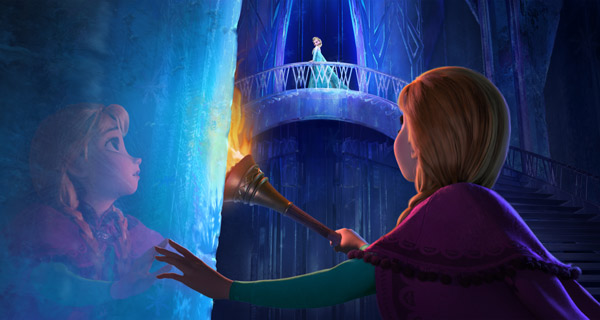
As I stated in my previous Frozen corner post, I believe that Frozen did what Brave tried but failed to do.  Both films had an agenda - to address the critics that say Disney can't make a movie that in genuinely good without having a love story tied in.  Frozen got people because what was seemingly a typical Disney story became a sisterly love story that surprised even the critics.  Yet the Disneyfication is still there which people always hate on yet didn't seem to comment on so much this time around.  They were blinded by the ending, once again.  Disney got the last word and people fell for it, including me when I first saw it.
In my opinion, the story of the Snow Queen could have been done SO much better.  Disney should have created an original story to attack the critics with.  I can't believe I am saying this but Brave does one up Frozen on this count.  Brave was original.  Sure it borrowed heavily from A LOT of folklore and fairy stories but it was still original.
I keep going on about how the film compares to the Fault in our Stars and the ending masking the film's true colors.  Allow me to switch the tone of this blog to a more organized fashion.  There are four things that I believe this film did wrong and I am going to address them below.  These four things are - story adaption, music, terrible villain, and too much focus on political correctness rather than making a solid movie.
So let's start with my first point - the story adaption.  I already touched on this briefly above.  In the original fairy tale by Hans Christian Anderson, the story of the Snow Queen is very magical and exotic.  The female lead, Gerda, goes off looking for her friend Kai who was kidnapped by the Snow Queen.  On her journey we find that the world around her seems to be a character itself.  Gerda often speaks to the rivers and the plants and the trees and this brings a poetic feel to the tale.  The story also incorporates an evil mirror which is very haunting and hints back to stories like Beauty and the Beast and Snow White.  Why Disney did not include this beautiful imagery is a mystery to me.
Another bit of confusing information is...why did Disney feel the need to change the story from pro-female to....pro-sister female?  The story was already pro-female without the Disneyfication.  As I said above, why aren't more people commenting on this?  In the original story, the boy character is kidnapped and the young girl goes to rescue him all on her own with help only from nature and animals and at one point, a criminal's daughter.  I mean, I like Disney's take but I wish they would have just used the original story and instead structure an original story to attack critics with.  The Snow Queen would have made an excellent film if adapted properly.
The original story holds on to a very important theme - the theme of innocence.  It borrows verses from the Bible which talk about staying young at heart even as we age.  This biblical imagery really adds culture to the story.  The story also puts heavy emphasis on summer and the idea of summer.  So my question is, why did Disney not take advantage of this theme when it is Walt Disney's signature belief in his films?  Walt clearly states that he was making films for the child in all of us.  Why would Disney remove such a key component to the history of their company?  My God, why?!  The film, therefore, not only abandons that idea in the story but abandons it in the execution as the character, music, and dialogue clearly show that this movie was made for a target audience - children.  Not the child in all of us, just children.  And that kids is called, manipulation.  I hate to say it but it is true.
The film wanted to tell a good story and I can see that, but like the Fault in our Stars, it takes a poor story and masks it with easily conveyed themes and ideas.  The Fault in our Stars was liking watching a Secret Life of the American Teenager rerun (ironic the same actress from that show will be in the film adaptation?) while Frozen was like watching a Dream Works movie...okay, that may be taking it too far...change Dream Works to Don Bluth.
Taking the conflicts that the film sets up, the ending is solid.  But again, that is not what makes a good film.  Ultimately, the crutch of this film is it's dependence on tropes and the perception from the viewer - both do not dictate a piece's value.
Now we can move on to the music.  The very first time I saw this film in the theater I was aware of the sudden shift in musical tone in the movie.  It started out epic and then turned into normal pop blah.  I enjoyed the soundtrack and listened to it almost everyday at work but knew that it wasn't very good.  Then, about a week ago, I came across a post on Tumblr with an audio clip titled "Frozen's Let it Go World of Color Orchestration".  I listened to it and was blown away.  The audio track was basically Idina Menzel's vocals from Let it Go and the orchestra from Disney Land's Christmas World of Color sequence.  The outcome was amazing!  I've never been a huge fan of Let it Go.  I mean, it got stuck in my head on more than one occasion but it never stood out to me like everyone else claimed.  The lyrics were easy and the melody was very soft, not epic like people made it out to be.  But the World of Color version is EPIC.  Seriously, why wasn't this version in the film?  I don't think I can ever listen to the original track again.  The World of Color version is too good.  I think this version has become my favorite track now where before my favorite was the ethereal choir track titled Vuelie (which was "inspired by indigenous Saami and Norwegian culture, and was written and composed by Norwegian composer Frode Fjellheim. The song is a combination of Saami yoiking and the Danish Christmas hymn "Dejlig er jorden"/"Fairest Lord Jesus", composed by Frode Fjellheim. The original hymn is composed by the Danish composer B.S. Ingemann. It appears to be the only lingering openly-Christian element of the film, as other Christian imagery [such as the crosses on the Bishop's mitre and Elsa's scepter and crucifer and the banner of Joan of Arc] was removed") and first track Frozen Heart.  The World of Color version of Let it Go adds power and even had cultural sounds within it that the original version sadly lacks.  It holds the power that the first track has before the movie enters into a lackluster following soundtrack.
The music in this film seems to have been written to reflect the modern popular taste just to pull in crowds.  It reflects Frozen's agenda and masks a poor musical with poppy, ear worm, fun music.  Without any real standout music besides one song and a ethereal score and a could have been that is only used in a night theme park show, this musical becomes blah.
Now let us move on to the villain of this film who is Hans.  When I saw this movie, I already knew Hans was bad as I had read a picture book adapted from Frozen to see the ending beforehand.  Throughout the entire movie I looked for signs that would show that Hans was bad.  About 3/4 of the way in I began to wonder if I had read the picture book wrong.  While many may believe that Hans is a fantastic villain, I find that there is a strong disconnect between his motivations and the way he actually acts.
Hans is clever and many would make that argument to defend his case, but his facial expressions and body language should have betrayed him at his greatest need.  For example, when he and Arandelle's men journey on the mountain to Elsa's ice castle, we see two instances where the audience should have been able to see some of his true colors and that would have allowed at least some to guess his true allegiance. The first example is when Hans is running up the ice stairs and the snow monster breaks the surface beneath him.  Hans almost falls and you see this look of earnest terror on his face as he realizes he will be unable to protect Elsa.  His face and body language should have reflected his want to save his own skin.  Then, once he recovers himself he actually goes up to Elsa and continues to try and protect her!  What?  If he was truly bad, why didn't he remain where he was or find safety somewhere while the soldiers did his dirty work?  Again, bad choices made by Disney.  It is in these moments that our true colors shine through and Disney clearly messed the mark.
Some will say that Hans is an extremely clever villain who knew what he wanted from the beginning and is a good actor.  From a film standpoint, the technique Disney used in terms of shadowing and the use of gloves to show he is hiding something was done well.  But Disney chose the wrong audience to do this with.  If one aspect of a film is intellectual I would expect the entire thing to meet the same standards in which Frozen doesn't.  The character design was done poorly and Disney definitely failed in that aspect.  They should have paid attention to not only the film hints but also the visual hints in the character facial expressions and body language.
And finally, this movie focused way too much on being politically correct.  The sisterly love ending was surprising and well done in terms of what this movie offered.  But Disney was focusing so much on political correctness and modern viewer approval that they misjudged in so many other areas.  They used stunning visuals to distract people from this failure and poppy music.  The characters looked like Rapunzel clones...no I'm not joking.  The culture is 95% non-existent in the film...it should have been incorporated in the music, in the story as I explained earlier, and with the objects around them.  Notice they removed many Christian elements from the story...again, political correctness at it's finest.
Here are some things they should have done in the movie.  They should have tied up the story in a better fashion.  The ending, while I liked it, was sloppy.  Things that could have tied the story was Kristoff remembering Anna since he saw her when she was taken to the trolls.  The movie makes it seem as if he has no idea who she is.  She should have said something or he should have had a memory spark that would help him remember her.  Another thing that could have tied the movie together would have been bringing the ice men back from the very beginning.  Seriously, you can't just put them on there for filler.  There should have been some significance and these men should have been more prevalent in Anna's life.  Having these men at the end would have also tied things together like ring composition.  Also, Olaf should have been a more prevalent connection between the sisters or more fatherly.  He is briefly touched on in this movie but it is hard to tell the impact which he has on Elsa when she sees him.  And plus, how did she create him without knowing it?  How did she create an ice castle?  They should have shown her building little ice castles and practicing as a child.  Once again, poor storytelling.  It makes me mad to think of how much better this film could have been!
Disney needs to realize that a story doesn't depend on love or romance but how well the story is told.  The only reason they include the sisterly love is to break their own stereotype.  But in the Disney Renaissance era, the company still made good films while sticking to their tradition.  Even Princess and the Frog sticks to the Disney theme.  Another example of a romance story where a girl does certain things to her lovers will is Romeo and Juliet.  Look at the character of Juliet who commits suicide for a man!  So why is this a classic?  Well, because of the execution of her story - that is what matters!  Stories are now less about making a good product and more about representation and having a political agenda to meet the expectations of modern days audiences.
To conclude, this film is a guilty pleasure.  That is all there is to it.  As I have stated already, I enjoyed the film, enjoyed the ending and enjoyed the music but at the end of the day, did any of this stuff really wow me and challenge me?  Nope.  Just like the Fault in our Stars, the experience was fun but the end product is a let down.
The film uses masks that hook people to see past the poor story, sub-par music, a terrible villain, stupid dialogue, and the obvious lack of culture.  Remove the sugar pop soundtrack and the sisterly love ending and people wouldn't be nearly as excited about this film as they are.  The Fault in our Stars uses the mask of Gus being the guy of every girls dreams and lots and lots of pop culture references that don't help the story in the end.  These masks hide the reader from the terrible dialogue, poor character development and structure, and create a very "Secret Life of the American Teenager" cheesy story that really depends on petty non-realistic high school situations.  It is bad fiction.
My response to Eric's comment is that I disagree.  I don't think Frozen is the Twilight of Disney movies.

Sources:
DisneyWiki: http://disney.wikia.com/wiki/Vuelie
Let It Go World of Color Orchestra: http://thedisneyden.tumblr.com/post/81616804142/gwerner-so-this-is-the-best-version-of-this 
My two reviews of The Fault in our Stars:
2012: http://thereader101.blogspot.com/2012/06/reading-fault-in-our-stars-by-john.html
2013: http://thereader101.blogspot.com/2013/06/reading-fault-in-our-stars-by-john-green.html

This post is brought to you from Danielle's Corner.  Be sure to give this post a plus if you liked it.  Do you agree with Danielle's points?  Do you disagree?  Why or why not?  Let us know in the comments! 

Tuesday, April 8, 2014

Danielle's Corner: Literature vs. Film, England vs. America, Authenticity vs. Corporations, Travers vs. Disney

I grew up in a generation where literacy was declining at a rapid rate.  Not many children in the 1990s liked to read.  So literature was forced on us.  I can't say I minded it, being a book lover all of my life.  Our teachers would give us books at the end of the year and we had reading time and reading days and guest authors visiting twice a year and summer reading challenges...the list could go on and on.  All of this was done to encourage students to read and to teach them that reading is fun!  Kids still seemed to enjoy the television more though.  And who could blame them?  The 1990s is also known for the incredibly well thought out entertainment that was distributed.  Sure kids may not have liked books but they liked Nickelodeon and the Disney Channel and the Disney movies that were being released.  Why would kids need books when shows like Pokemon and The Wild Thornberry's were on TV?  Why would kids need books when Disney was at the peak of their best era yet?  This isn't to say that 90s kids were couch potatoes.  I mean, besides TV, movies and the awesome video game consoles and our brand new computer, my brother and I spent a great deal outside bike riding and trying to shoot our own movies with our father's video camera.  We went to the pool almost every day during the summer months and made obstacle courses in our driveway.  My friends and I choreographed our own dance moves to Backstreet Boys songs, played board games and did arts and crafts.  It wasn't until Harry Potter was published that kids got back into the spirit of reading.  The seven books series truly changed literature as we know it today.
I think it is safe to say that I grew up as a child from both sides of the spectrum.  Yes I grew up with all of this media which I loved and still do love but I also grew up loving books and reading.  As I grew older, I became aware of this war that goes on between the two mediums and even participated in it a time or two.  The war is between books and movies/TV.  Which of the two are better?  But the argument goes deeper than just that and it is Saving Mr. Banks that takes this argument from a true story and fashions it in a unique way to create a fantastic film that isn't afraid to talk about both sides of the argument rather than be biased toward one specific point. 
As a rule, a lover of books is taught to hate their film adaptations.  I can most definitely say that there are movies out there that do no justice to the books they share the same title with.  Hollywood always seems to disappoint me when it comes to adapting a book into a movie.  I'm not disappointed that every little detail is missing.  I'm disappointed because Hollywood often moves the stories they adapt into a certain direction to make money and for the sake of financial things like paying the actors and stuff.  The written word has a lot more freedom than the screen though and while I get upset a lot, I also understand why certain choices need to be made.  Clearly the actors need to get paid.  When it comes to Disney though, I leave my bookish self and enter a whole different spectrum of the argument.  I defend the movie adaptations!  Believe it or not, this is something I have wrestled with.  Art is important to me and I often ponder about why art is made and how it should be made and why it is important.  I feel hypocritical when bashing the Harry Potter films yet rejoicing over a Disney movie that was adapted from an incredible piece of literature that fans say is dehumanized and fluffy now that Disney came into the picture.
Saving Mr. Banks seems to be my own swan song in a way because this was a film that truly took a look at this argument. The main focus of the film was P.L. Travers vs. Walt Disney but the debate went so much deeper than that.  Underneath that layer is the authenticity vs. corporations argument - that P.L. Travers wants to keep her work honest and true instead of adding another brick into Walt Disney's money machine kingdom.  Then we stoop down another layer into the England vs. America debate.  P.L. Travers leaves her relaxed and slow moving jolly ole England for the fast paced and impersonal land of the free.  And then the final layer of the film and the film's heart seems to lie in the literature vs. film debate.  Which is better?
Three things I concluded from these three comparisons.  Walt Disney trumps two of these debates.  Toward the end of the film, when Walt comes to visit Pamela at her home, he brings himself to her level and shows that he too is trying to tell a good story in his movies.  Yes he makes money but he is doing so while he tries to make a genuinely good product.  Yes the film may be a bit too happy but for Disney, making people smile was all the joy he could ask for.  He wanted to bring out the child in everyone.  Secondly, Walt Disney breaks the impersonal land of the free stereotype by staying on a first name basis with his employees.  He knows every one of them by name...seemingly, who knows if that was true but I hope it was...and takes the time to get to know people.  He shows people respect and tries to make his company a relaxed and creative environment as it should be.
And my final conclusion, and the biggest conclusion I came to, is that in the end both film and literature are great mediums.  I love films.  I love books.  No, I will never love the Harry Potter movies but I will always love the Dark Knight trilogy and Mrs. Doubtfire and of course, Disney movies.  And I will always love my books.
This film gave me a sense of closure by the end and it is strange to say that I was indeed a different person when I left the theater.

Saturday, April 5, 2014

Danielle's Corner: "Not true Disney created man in his own image?"

There is a congregation known as the Church of Disney.  Many people subscribe to it.  The Church of Disney is a sect of the Christian religion that believes that being a good person and doing good works will earn your salvation.  The Church of Disney believes that when you wish upon a star, all of your dreams, wants, and desires will come true.  Good will always triumph.  Believers in the Disney religion believe as Robert Schuller states, "Ultimately, God will reward the right and will never reward the unrepentant wrong."  Follow your heart is their motto.  "The Gospel of Disney is all about me.  My dreams.  My will," says Phil Vischer, co-founder of the popular animated vegetable series, Veggie Tales.  Believers also make annual pilgrimages similar to Muslims journeying to Mecca.  Their place of worship - Walt Disney World (or Disney Land, depending on your denomination and geographical placement).  
Now, can you tell me how silly that first paragraph is?  I mean, the actual idea of a religion based on Disney is absurd.  Yet the realization is a fact for some people.  Religion is defined as a body of people who adhere to a set of specific principles in order to live a better life.  Disney has become just that to Americans.  P.L. Travers was not far off when she sarcastically remarked in the film Saving Mr. Banks, "not true Disney had created man in his own image?"  For as some Disney fans know it, Disney is the teacher by which to live by and Walt Disney himself is the god of it all.  
Allow me to say that I love Disney.  If I didn't, I would not have agreed to be on a podcast all about the global phenomenon!  But this is a real wake up call for me.  It is a harsh reality check.  I have fallen victim to the Church of Disney however I don't think Disney itself is a demonizing force.  Far from it!  In this post I hope to capture why the Church of Disney exists and why, flipping the coin, Disney is important to the study of the Christian God.
***
When Snow White and the Seven Dwarfs came out, Disney took America by storm.  From a film standpoint, the movie was technologically advanced as well as visually stunning and sugared candy to the ears.  But Disney did much more with his first full length animated feature than just change the film industry.  As with reading the Bible, it is important to look at the cultural and historical aspects of this situation in a well rounded manner.  The world isn't just made of film guru's which means we need to ask the question, why else was this movie catching fire?
Snow White and the Seven Dwarfs was released in 1937.  What was going on in America in 1937?  Well, Americans were knee deep in the Great Depression.  Following the Great Depression was World War II and following that was the Cold War.  I think it is safe to say that these were dark and heavy times for America.  When Disney popped into the entertainment scene, his movies became a symbol of hope for Americans.  His films presented a light at the end of the tunnel analogy.  Things would get better.  The films were a morale boost.  They were an easy way to give people what they desperately wanted to hear.  Disney movies told people that it pays to endure.  Just look at Snow White who says, "I will get along somehow" when she journeys through the woods.  Her positive attitude toward the hardships in her life were a representation of how one must act in difficult times.  
I have come to learn a few things growing up as a Christian and a Disney lover.  One is that being positive is always important.  It is a way of looking past obstacles and moving forward with life despite hard times.  Another thing I have learned is that it is okay to be sad or depressed.  It is okay to feel down.  No one is perfect.  Feeling down is only in human nature and sadness should be embraced.  No one can be happy all of the time.  While Disney movies are generally positive things, I don't think they embrace just happiness.  Each film has it's sad scenes.  But by the end of the films, the character is once again happy and content with their life.  I don't think the movies are saying just let it go and move on and forget it and you will be happy.  The films are saying that bad things will happen but one day you will be able to come to terms with it and move on.  That of course is just my opinion on the issue.
Disney movies have greatly influenced American Christianity whether we like to admit it or not.  Disney teaches that good deeds will get us into heaven and that prayer in times of want or need will come true and effort does not need to be put forth when it comes to belief as long as it is a belief based on faith and faith alone...and trust, and pixie dust of course.  
There are many Christians who will tell you that Disney is evil and part of the Illuminati.  However, as a Christian myself, I don't subscribe to the philosophy that Disney is a force to be dealt with.  I believe pop culture can be a great way to connect with God.  The philosophy I subscribe to then is learning from the art put forward.  Leonard Martin phrases my feelings perfectly when he says, "Magic takes you away and shows you a better life.  And then it allows you to apply it to your real life."  I came to this philosophy when I was 15 years old at a place called Camp Montrose, a church camp.  Since this was a church camp, one of our daily activities was going to chapel twice a day - morning and night.  Chapel included singing worship music, hearing a sermon from the Pastor, and some activities to make us laugh or contemplate the universe.  One night, after laughing and singing and having a great time, the Pastor had us all watch a movie clip.  I looked on excitedly and was surprised when The Lion King popped up on the screen.  Our Pastor was showing us the scene when Simba meets Rafiki and then sees his father's ghost in the sky.  I remember crying.  I wasn't crying because of the symbolism of the scene.  I was crying because of the nostalgia I felt.  This movie had a such a big impact on my childhood and to see it again and hear the music and feel the impact of that very moment was a lot to take in at such a late hour of the night.  The Pastor then went on to explain the symbolism of that scene and why it was important to us as Christians.  He said that like Simba, we all have pasts and mistakes that we are ashamed of or afraid of but we can't live our lives dictated by the past.  We must remember who we are in Christ and take the road we were meant to take no matter how scared we may be.  It was from that point on that I subconsciously subscribed to the belief that art should always be quality and if it is quality, we should take something from it and learn from it.  Disney is quality.  They are quality in music, story, characters, humor, animation...90% of the time.  Their impact on culture is one thing but shouldn't be taken into account 100% of the time.  If we are to measure a piece by it's cultural impact, than Twilight is a literary piece to conquer the ages and that makes me shudder with fear and wonder how our culture has stooped to such a low state.
"I have discovered the gospel from time to time within [Disney's] celluloid frames of animation," says Reverend Michael Catlett in his sermon Every I Needed to Know I Learned from Watching Disney.  "I have heard the gospel pronounced by some unlikely characters.  The gospel is not relegated to special places and times.  If we will but listen we can hear it spoken all around us.  Sometimes we hear the gospel through children's stories contained on VHS tapes with a mouse ears logo.  I want to listen to the gospel wherever I can find it.  Don't you?"  I have too found the gospel in unlikely places not just within Disney but within great works of literature, popular films and indie films, and even in controversial works like Harry Potter.  It is why I decided to become an English major in college, so that I could study works of fiction and see how they relate back to the gospel.  It is a really fascinating subject.
Walt Disney believed in the idea that he wasn't just making films for children but for the child in all of us.  He made films that focused on returning us to innocence.  The Bible too tells us to remain in our innocence in Luke 18:17, the verse referred to Hans Christian Anderson's Snow Queen tale.  The verse says, "Truly I say to you, whoever does not receive the kingdom of God like a child will not enter it at all.”  This is not the only example of Christian symbolism throughout Disney.  I plan to talk about these things more in future podcast episodes and blogs.
Now, don't worry.  I'm not one of those people who plans to shove my faith on all of the listeners.  I believe that talking about this kind of stuff and having differing opinions is really important.  It's okay if we disagree on things.  In fact, I welcome it.  I won't lie when I say that I don't feel uncomfortable at times when people contradict my own way of viewing things but it is always fascinating to me as to why people believe what they believe and why they come to certain conclusions.  I'm sharing my understanding with you guys and would love to hear about your understanding.

Quotes and Facts from: The Gospel According to Disney by Mark I. Pinsky 
(BUY ON AMAZON)
This post is brought to you from Danielle's corner.  Be sure to give this post a plus if you liked it.  Do you agree with Danielle's points?  Do you disagree?  Why or why not?  Let us know in the comments! 

Thursday, March 27, 2014

Danielle's Corner: Why Frozen did what Brave tried but Failed to do

I have a feeling my attitude during the Frozen Part 1 podcast made it seem as if I loved the movie.  Not true.  I actually agreed with Eric on more points than one and feel the movie seriously lacked in artistic originality.  That isn't to say I didn't enjoy the movie.  I saw it in theaters and bought in on DVD after all and I do enjoy the story for what it is and what it was going for.  Overall, the movie has many weaknesses and while we are releasing another Frozen discussion podcast in the next week or so, there are a two things I want to address outside of the podcast.  These two things are why the movie was a success and why the movie was a failure.  I am in the middle about how I feel about this movie and so I figured it would be perfect to address both sides of the argument.  This blog post will be about why Frozen was a success in my eyes.
When I entered the movie theater, my mind was focused on many things.  First off, I'm not a huge fan of Rapunzel from Tangled.  One of the worst scenes in Disney movie history in my opinion is during Tangled when Rapunzel goes back and forth deciding whether she is having the best day ever or whether she should return to her tower.  The exposition is so cliche and so obviously geared towards children that I wonder if Disney just got lazy.  The whole purpose of Disney movies, according to Walt Disney himself, was to reach the child in all of us...not make a children's film.  As I sat down to watch Frozen, I hoped that none of the main female characters would be a Rapunzel (meaning overtly silly).  Anna is definitely a partial clone of Rapunzel but I found her a lot more tolerable which put this movie in high regards for me by the end.
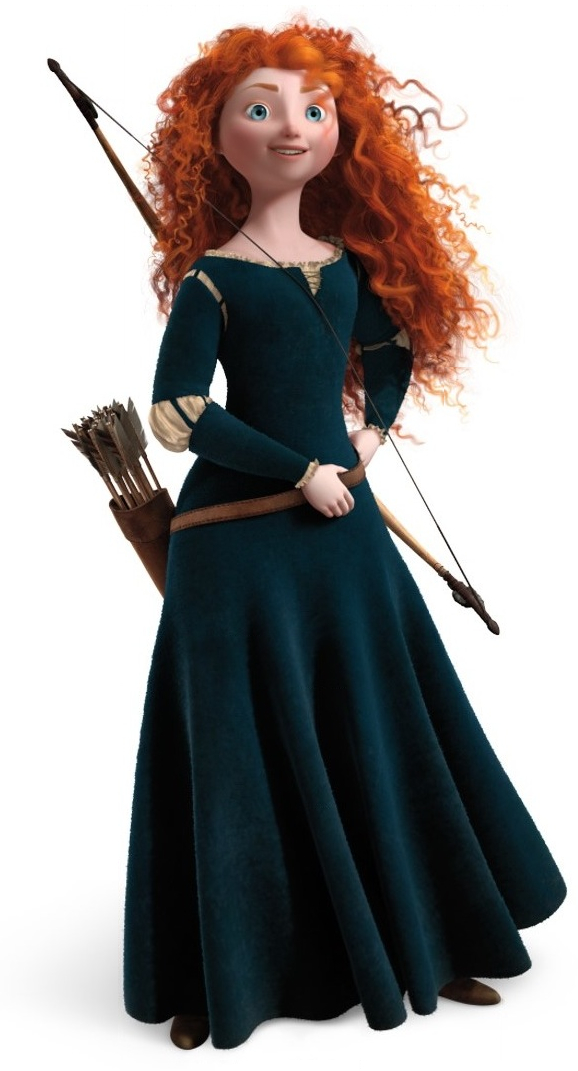
The other movie that is permanently stuck in my brain is Pixar's Brave.  I saw Brave in the theater as well and took notes on it for a film class.  I believe it to be one of the worst Pixar movies and I find it to be an overly obvious attempt at Disney/Pixar to please critics of the usual Disney Princess.  I am a huge defender of the Disney Princesses and it annoys me to no end when people criticize their characters for being bad role models when I believe they are very good role models.  Merida was seemingly the company's way of fighting back and while I commend them for it, I also wish they would stick to their roots and not make a movie so blatantly obvious about it's political message.  Disney shouldn't have to feel bad about the films they have put out but treasure their characters and make films that are genuinely good stories, not to please their critics.  As the movie started, I hoped it wouldn't be another Brave.
And finally, I was praying that Disney would finally release a genuinely good film.  We all know Pixar is almost always on their A game but Disney has struggled.  The last really great film they released, in my opinion, was Princess and the Frog which didn't do so hot at the box office.  Wreck-It-Ralph is also a great film though there are a few things that hold it back for me that I won't address in this post.  When Disney released their catastrophically awful traditional hand-drawn animated film Home on the Range, they hardly made any money at the box office and came to the conclusion that hand-drawn animation was boring and they needed to go into the same direction as every other animation company - CGI.  There are two huge problems with this.  The first is, did it ever occur to Disney that their film may not have done well because of poor marketing?  Or more importantly, because it was a terrible excuse for a film??  And another thing, since when does Disney conform?  The whole purpose of Disney is their unique ability to create fantastic animated movies that are not only stylistically beautiful but rich in story and music (and more often than not, slapstick comedy).  I don't want Disney to try to be like DreamWorks.  I want Disney to be DISNEY!  CGI annoys the hell out of me.  For some films, it works.  Pixar films never have bothered me because CGI is their bread and butter.  Shrek is one of my all time favorite movies...and yes, I know that is DreamWorks.  While change is good, and certainly Walt believed in new technology and moving forward, I don't think Disney should shy away from traditional hand-drawn animation.  It is crucial they stick with it.  CGI all looks the same to me.  The characters in Frozen all seem to look like recycled Tangled characters.  My fear was that this would be yet another Disney let down; they would tease us with CGI but the product would be lackluster and unoriginal.
Frozen defied every one of my preconceived ideas that I have listed.  It created a strong female character who wasn't an obvious Merida but not an obviously ditz Rapunzel and the animation was actually rather good.  I still don't like CGI and find the characters to look better in traditional animation but that aside, I genuinely enjoyed the animation.  In other words, the film surprised me...something Disney has not done in a long while and for that I give the movie a thumbs up.
Watching the movie a second time to discuss on the podcast was a real treat.  There were some scenes that I thought were so well done.  The three that stood out to me were as follows...
Anna and Elsa's interaction scene as children.  Even the scenes shortly after watching Elsa trying to control her powers.  The two of them bonding and having fun in the snow combined with the gorgeous score and fantastic cinematography just made an overall solid scene.  The next scene I loved is when Anna asks Elsa for her consent to marry Hans.  Disney does such a good job in this scene of showing and not telling.  We see Anna who is desperate for love and a connection with another person that she has never gotten with her sister and finally she is becoming confrontational about it.  She is sick of being shut out.  And then there is Elsa, who is just simply afraid of the world knowing what she can do.  When Anna takes Elsa's glove, you can see the pain and history in both of their eyes and in their dialogue, especially when Elsa says "Then leave" to Anna.  The scene is a great character moment for both sisters.  The final scene that stood out to me was Anna and Kristoff's first full length conversation on the sled in the woods before the wolves attack.  I'm not quite sure what did it for me with this scene.  The dialogue was very consistent I guess.  The two went back and forth at each other, balancing out the tension and it was just an overall great scene.
Another thing I loved, which we talked about during our Part 1 episode, is the use of film hints throughout the movie.  For example, while I think Hans was a very poor villain, it is cool to see how the filmmakers hinted at him being a bad guy using stylistic choices rather than choices to hint at his true colors using body language or something.  They leave his face open and in full view a lot during the beginning of the film, showing us he is good but as the film goes on his face becomes more and more shaded, showing his true colors.  Another thing is the gloves he wears.  In film, gloves can symbolize that someone is hiding their true identity.  You will also notice that Elsa wears gloves.  She removes them during her show stopping Let it Go when she decides to take charge of who she is.  Hans only removes his gloves when he tells Anna his true plan and then puts them back on when he leaves her.  It is very clever storytelling.
My all time favorite shots in the film were of Anna jumping in front of the painting of a woman on a swing and Elsa running up the ice stairs she was creating.  So beautiful!
But ultimately what this movie did that "Outdid Brave" as I said in the podcast, is that it took the typical Disney heroine and didn't change her to make a good story that is empowering to girls.  Yes, both films are empowering but from an adult perspective and a creative perspective, Frozen blew Brave out of the water!
Can't say much more cause I don't want to spoil Part 2 of our Frozen discussion!  Hope you will tune in!

This post is brought to you from Danielle's corner.  Be sure to give this post a plus if you liked it.  Do you agree with Danielle's points?  Do you disagree?  Why or why not?  Let us know in the comments! 

Monday, March 17, 2014

Danielle's Corner: Snow White and the Garden of Eden

I have yet to post a blog talking about my faith and what it has to do with Disney.  I plan on incorporating aspects of faith into the podcast discussion and into my Corner blogs.  Ever since I was 15 or 16 I have come to notice spiritual and religious themes through film and literary texts and music and I instantly became obsessed with studying these themes and why they are so powerful to us, even if we don't claim to believe in religion at all.  Disney films contain a ton of spiritual themes and imagery.  I will be posting a longer blog about the ongoing debate between biblical Disney and anti-biblical Disney but until then I want to share with you the religious themes I noticed in this movie, Snow White and the Seven Dwarfs.
The biggest Christian element in this movie is, obviously, the poison apple Snow White eats.  It wasn't something I picked up right away but maybe a few days later when I was officially typing up my notes.  The story structure of Adam and Eve in the Garden of Eden is one many stories hark back to.  We can clearly see the allegory through this story.  For me personally, allegory isn't always something that was intended by the author/creator but can be interpreted from the work.  As I will explain in a more detailed blog, Walt Disney wanted to stay away from religion in his films and make them universal for everyone which is why I don't think this was done to represent a biblical moment.  It is just a critical part of the story that happens to reflect something that is reflected in many other works of fiction.  That being said, I do believe the Grimm Brothers who originated the fairy-tale had the Garden of Eden in mind.
Anyway, the Evil Queen plays the evil snake, Lucifer, while Snow White is our Eve.  Notice how much Snow White's story before this reflected the Garden of Eden as she harmoniously gets along with the animals and has a very cheerful outlook on the world around her and is innocent.  The apple the Evil Queen carries is the forbidden fruit.  Snow White isn't specifically warned not to eat the apple but she is warned by the Dwarfs to be suspicious about anything or anyone because it may have to do with the Evil Queen's plan to kill her.
Another clear religious symbol is the magic mirror the queen looks into.  Disney uses the theme of reflections a lot in their films.  The mirror essentially represents the root of all evil and sin which brings about things such as greed, pride, jealousy, etc.  It makes it all about ones self rather than seeing the bigger picture.  This is a bit ironic though because Disney movies are known for making your dreams come true and following your heart.  That seems very similar to looking into a mirror but that is a whole different debate which I will have to save for another blog or discuss during the podcast.
Those are the two things that stuck out to me.  Is there anything else that you believe is biblical in the tale of Snow White and the Seven Dwarfs?  Let me know your thoughts in the comments!

This post is brought to you from Danielle's corner.  Be sure to give this post a plus if you liked it.  Do you agree with Danielle's points?  Do you disagree?  Why or why not?  Let us know in the comments! 

Sunday, March 16, 2014

Danielle's Corner: The Redemption of the Evil Queen

I watch the show Once Upon a Time on ABC.  I won't lie to you, the show appeals to me.  I love fairy stories with their fun lighthearted and moral elements.  But I also like raw stories that are dark and don't sugar coat things.  Once Upon a Time tries to be the show that bridges that gap between those two elements...though in my opinion the show fails to truly bring these two genres together.  The show has a ton of flaws and is cliche.  The actors are okay.  Some are awesome and some I can't stand.  But I still watch the show because there is something about it that brings me back.  That something, or someone I should say,  is the Evil Queen.
First of all, the Evil Queen (Regina) is arguably the best character in the entire show.  There are many attributes to this statement.  The first attribute is that her character is complex but not in a cliche sort of way.  Tons of characters from Once Upon a Time are made to seem complex when really it is just easy writing.  I'm in no way saying I could do better but that is just my opinion.  Regina is by far the most well thought out character.  Her back-story is beautiful and heartbreaking.  She is flawed in the best way possible and is the balance in the show.  She balances the show by being the bridge between good and evil, the see-saw that constantly is falling back and forth and living out the eternal struggle of living for one's own self interests or living for something greater and beyond themselves.  Besides her actual character, the actress who plays her, Lana Parrilla, is incredible!  She plays Regina with such grace and charisma.  The best part of her performance is watching her facial expressions.  The performance is all in her face.  No other actor in the show seems to capture the complexities of their character as she does...though Mr. Gold/Rumpelstiltskin comes close.
As I said above, I watch the show and enjoy it but don't think it is a good show per say.  However, I do have a hope for the show that would redeem it.  I hope beyond hope that my wish will come true (pun intended)!  My hope is that the show will end with Regina becoming good.  Not a temporary good like we have seen in previous episodes.  I mean she will truly become a good human being.  The show seems to revolve around the struggle she encounters every day about choosing which side she wants to be on and it is so good, it makes me feel like she is the show and it should end with a focus on her.  That would make me so incredibly happy!

This post is brought to you from Danielle's corner.  Be sure to give this post a plus if you liked it.  Do you agree with Danielle's points?  Do you disagree?  Why or why not?  Let us know in the comments! 

Friday, March 14, 2014

Danielle's Corner: Ring Composition in Snow White and the Seven Dwarfs

If you've never heard of the term Ring Composition, don't be alarmed.  I wouldn't be surprised to know that you've never heard of it though I know for a fact that you've come across it.  How do I know?  If you have watched any Disney film, you have experienced Ring Composition in some form.  Ring Composition, as defined by John Granger (known as the Hogwarts Professor for his study of the Harry Potter book series) is a structure used by many creators (whether they realize it or not) as a means to bring a story full circle.  Granger asks the question, "What is it about [a] story that makes me, the serious [consumer], love it?"  He believes that Ring Composition is the key to this question.
It is from John Granger that I learned about Ring Composition.  I was lucky enough to be a guest host on the podcast he co-hosts called MuggleNet Academia and the big topic of my episode was narrative transformation and Ring Composition.  Granger believes that we are somehow "hard-wired" for the circular story.  The fact that we keep returning to the magic of Disney time and time again gives reason to believe in this theory.  Though a Disney movie may not carry the same weight or complexities as Harry Potter in terms of content (but not audience interpretations/feedback), I have noticed that a ring is most definitely in most of these films.  I can't say all because I have not seen every single Disney animated film.
Still confused?  I can tell you I was confused too when I first heard about this concept.  Don't worry.  I will put further reading below this blog post.
Harry Potter isn't the only book series to take advantage of this structure.  Classic series such as the Chronicles of Narnia use it as well as modern day series such as the Hunger Games.  Epic poems such as Beowulf use the structure too.  All three of these book series and Beowulf have something in common with Disney - most people seem to love them and want to return to experience them over and over again.  I was an English major in college and, surprisingly enough, I never once heard this term.  None of my professors touched upon it or even mentioned it.  This could be for several reasons but two come to mind.  One could be that Ring Composition is an intensely internal idea that can't truly be proven and as an English major we were often searching for clear cut points or literary symbols.  Of course, many would say we English majors are obscure and they would be right but also wrong.  There are a lot of things I learned in college and a lot I didn't but I can say that most of what I learned was very standard while Ring Composition is not.  Which leads me to my second point which is that Ring Composition is not a familiar aspect of story telling in the Western world.  When I say "familiar", I don't mean the Western world doesn't use Ring Composition because obviously that would contradict this entire blog.  What I am saying is that even though many artists use it, few understand it or even know it is a template.  As Granger says, we seem to be hard-wired for something like this and that means it comes naturally to us.  If we are good story-tellers, we may use Ring Composition.  If we are good judges of film, we may like the films that come full circle by the end, which Disney does a lot!
Speaking from the stand point that we do know what Ring Composition and it isn't just a subconscious theory in our heads, essentially, Ring Composition is when a narrator (or in Disney's case, film maker(s)) hints on a certain topic or topics that are significant to the story being told until this topic is realized.  The narrator will then move in reverse order by creating scenes that reflect the ones previously mentioned.  They do this to drill in a specific point that is important to the plot of the story.
Now, as my fellow hosts and I mention in our podcast episode about Snow White and the Seven Dwarfs, this is the very first Disney full length animated film and not everything was done perfectly.  But Walt and his team weren't stupid and they knew how to tell a good tale.  Whether they knew it or not, they were using Ring Composition in their movies from the very beginning.  I found three specific incidences of the theory while watching this movie and want to share them with you guys and tell you why they are categorized as Ring Composition.
The first Ring I noticed is with the Seven Dwarfs as they return from working at the mine.  There are three scenes where we see them returning to their cottage and two of them form a circle.  The first scene is when the Dwarfs are walking in the dark toward their home when suddenly Doc comes to a halt and the other Dwarfs slam into him, causing a commotion.  Doc has stopped because something fishy is going on - the lights are lit in their house and the chimney is smoking.  The cause of this business is Snow White.  The Ring comes full circle toward the end of the film when once again we see the Dwarfs returning home from a day of mining when a herd of animals comes running toward them and Doc comes to a halt and the other Dwarfs slam into him.  The herd of animals is once again fishy and once again, the cause of this fishy business is Snow White.  These two scenes form a Ring because they reflect one another, not only in scene structure but scene content.  Both scenes show the Dwarfs running into Doc and both scenes are concerning something that has to do with Snow White that makes Doc stop in his tracks.  The first scene we see the Dwarfs are weary about the situation while in the second, they choose to act straight away.  This shows character development.
The second Ring I noticed in this film is one that compares the evil Queen to Snow White.  As discussed in the podcast, Disney didn't do such a good job at tackling the mother/stepmother - daughter relationship between the Queen and Snow White.  This isn't a negative aspect to the film but one that gives the story a bit more depth.  Obviously it wasn't a story Disney wanted to tell and I won't get into that because it is a whole different issue.  Anyway, there are two scenes that do reflect this relationship between Snow White and her step mother.  The first scene takes place in the beginning of the film where we see Snow White flee into the woods on the orders from the Huntsman.  As she runs through the trees, she is frightened by the darkness and the supposed monsters around her.  The second scene is at the end of the film when the Queen also runs through the woods, though on very different circumstances.  Both women are running from something and meet different fates based on their rigid personality types.  Snow White, the good and pure character, met a nice fate after running through the forest while the Queen, the evil character, met a terrible fate after running through the forest.  The Ring ties together because all we want is for Snow White to get away from the Queen and all we want is the Queen to get away from Snow White.  Both of them running away and eventual deaths (though Snow White is only temporary) closes the Ring.
And the obvious Ring is at the very very beginning of the film and the very very end when we see the book open to introduce the story and then closes at the end of the movie to suggest we once again see this is a fairy-tale and we are now completely finished since the book is closing for good.

This post is brought to you from Danielle's corner.  Be sure to give this post a plus if you liked it.  Do you agree with Danielle's points?  Do you disagree?  Why or why not?  Let us know in the comments! 
If you want to learn more about Ring Composition, please refer to the source material below!

How Does 'Ring Composition' Work, Anyway?  |  Harry Potter as Ring Composition | Beowulf | Harry Potter book series | The Chronicles of Narnia book series | The Hunger Games book series | Ring Theory Interview with John Granger on MuggleNetThinking In Circles

Thursday, March 13, 2014

Danielle's Corner: The Art of a Disney Fairy-Tale

There are a lot of big issues that surround the Walt Disney Company.  I grew up with Disney and still love it as an adult...heck, I just started a weekly podcast about the whole thing!  I must love it to do something like that...but that doesn't mean I don't take these issues lightly.  Disney is a global phenomenon.  At it's heart, the company was founded on the principal that they would make films not just for children but for the child in all of us.  Yet they are also a business and like all businesses, they often make choices for the sake of staying in business or making a prophet.  What we then see is the thin line between artistic creations and manipulation.  What do I mean by that?  Simply put, Disney has released films that are artistically amazing in my opinion.  Then there are some films that contain certain elements there for the sake of getting people to go see the film rather than making a genuinely good movie.  Hey, it happens.  Every company seems to do it.  It bothers me and I still can't quite get my thoughts together about it.  But that doesn't get to the core of Disney's issues, that is only a surface issue.  Other issues that come to mind are race, hidden sexual images, the passive female and here-to-save-the-day male companion/future husband, and more.  Please know that I'm not saying my stance on any of these things - I'm just throwing them out there.
However, there is one issue that really bothers me and it fits right into the movie we talked about in our most recent podcast episode, Snow White and the Seven Dwarfs.  There is a scene in the Dream Works film Shrek where Princess Fiona goes out walking in the early morning when she comes across a bird and begins to sing to it.  The bird mimics her and each of them sing higher and higher until the bird can no longer compete and explodes.  The scene is hilarious and I should state right now that Shrek is one of my all time favorite movies.  But it is clearly poking fun at Disney movies, particularly Snow White and the Seven Dwarfs since there is a scene almost identical where Snow White sings to a bird who tries to sing as high as she sings but fails (though doesn't explode). 
This is something critics can't stand about Disney.  The relationship Disney characters have with animals is highly implausible and therefore should not be, for it apparently sends kids the wrong message.
For starters, Disney, as I stated above, at it's core is set on the principle of making a good film for all, not just for kids.  They aren't educational videos to teach kids how to behave...though they certainly aren't excused from the right to teach those who watch them.  I believe we can learn from every corner of the universe and Disney can't be excluded from that.  
So what is wrong with Disney characters having nice animal friends?  Well, in real life animals won't be there to warn your friends that you are in danger.  Animals won't be there in real life to make you a dress for the ball.  Animals aren't your conscience and they certainly can't talk.  
Is it just me or am I the only one who watched these films as a kid and knew right from the get go that they were make believe?  When I watched Disney movies I immersed myself in the world they presented to me that expanded my imagination and encouraged me to write stories of my own.  I loved to pretend to be a character in a make believe world with animals friends and adventures but I also was aware that this wasn't real life and that was okay.  I loved living outside of myself.  My whole childhood was practically living outside myself since I was constantly watching television and movies and reading books that took me away from real life.  Disney never taught me that my problems would be solved by talking animals or magic though these things gave me hope.  Sure I might have wished upon a star like my favorite characters did in hopes of my dreams coming true but that is reality.  Disney, in my opinion, isn't to blame for kids thinking this way.  Sure, Disney has helped propel this thinking but it is human nature to dream, to imagine the impossible happening and hoping for the impossible to happen.  Things that I believed impossible have become possible and they were mythical things but real things and it was Disney that taught me to hold on to hope from a young age. 
In my opinion, Disney isn't meant to reflect our scientific or physical reality but our spiritual and mental reality that goes deeper than what is literally seen on screen.  The child within all of us craves a good story and it just so happens that Disney is pretty darn good at telling them.  When the birds help save Snow White and the mice help sew Cinderella's dress, Disney isn't saying this is how we should solve our problems - by letting others do it for us.  If you remember, it was Snow White who solved her problem by finding shelter and making company with the Seven Dwarfs.  Cinderella never condoned staying at home forever passively but instead passively worked through the evilness that surrounded her, teaching viewers that even during hardship we must keep going.  
In the end, Disney is a fairy-tale!  Things like this are expected to occur in a fairy-tale!  As a child, I was completely aware of this fact and my growing concern is why so many others are not aware of this.

This post is brought to you from Danielle's corner.  Be sure to give this post a plus if you liked it.  Do you agree with Danielle's points?  Do you disagree?  Why or why not?  Let us know in the comments! 
Wednesday, March 12, 2014

Danielle's Corner Introduction Post

Hi there everybody!  Danielle here.  Before I begin I just want to give all of you listeners / fans / downloaders
a HUGE thank you!  If you look at the picture I have posted to the right, we are in the New and Noteworthy section of the visual arts category on iTunes!  Hooray!  And it is all thanks to you guys!  We can only imagine things going up from here!
And now back to the blog....
WELCOME to my corner, Danielle's Corner!  Each of us on the podcast have our own corners where we come after the episode is posted and expand on topics we may not have been able to touch on during the recording of the episode or we may have touched on but feel we didn't get to say as much as we would have liked to.  Again, this is another interactive aspect to the podcast!  We want your feedback!  Discussions are always welcome in the comments below.  Obviously this is a very different platform than speaking on the podcast and it will be our own personal thoughts with no one there to help us elaborate or critique us to later edit certain things out.  This is as raw as it is gonna get.  Just a reminder though to be friendly, not only to each other but to me too.  We all have different opinions and as Disney fans it is awesome that we can come together and respect each others opinions and politely agree to disagree.  I'm excited to share my thoughts and hear the thoughts you throw back at me!
Since this is an intro, I am briefly going to tell you guys my background in blogging and what I plan to blog about.
I have been blogging ever since I was 13 years old in some way, shape or form.  In 2012 I started up a blog called the Reader where I posted book reviews for the books I was reading to complete the challenge of reading 50 books in one year.  It was an awesome experience!  Blogging about books and literature has always been a passion of mine since then...but Disney is also something I am passionate about.  One thing I was always eager to blog about was my stance on the issue of the Disney Princesses being good role models or not.  My answer is yes, they are good role models.  But I knew I had to give the issue justice and always feared writing a blog in the princesses defense for fear I would write poorly or not explain myself properly.  Finally I wrote the blog and can not have been more pleased.  It is my personal favorite blog post to date.  The experience of writing that blog was stressful but also exciting and rewarding.  I think it took me 5 or 6 hours to write when I should have been doing homework but the hours and hours I put in were worth it in the end.  I always wanted to write more about Disney but felt that one post was enough (I did squeeze in another Disney blog though when I wrote a semi review of Monsters University).  After all, I wasn't running a Disney blog but I was running a reading blog.  Now that I have a new platform to write about all of my Disney thoughts, my brain has gone wild!
Halloween '96 when I dressed up as Snow White!

There are many things I plan to blog about but just to name a few...I will often write posts in defense of Disney.  I plan on writing posts about comparing Disney to faith because faith is a huge aspect of my life and something Disney has had a big influence on.  I also plan on blogging about music in the Disney films, social issues surrounding the films, narrative structure, and the artistic license Disney has to tell the stories they tell. All that and more will be in my corner...and maybe a memory piece or two.  I do have a lot of Disney memories from when I was a kid...
So that is my introduction!  I hope you all look forward to my corner posts along with Eric, Jen's and JD's! HAZA!
For further reading: Why Disney Princesses Are Good Role Models | Monsters University